
Buildings outlast the people who manage them. The record no one remembers exists is often the only accurate reference left once the person who held that knowledge in their head has retired, moved on, or changed employers. This is written for facility managers and...
Facility Managers
What to Capture Now So the Record Still Works Later
What you capture at scan time decides whether the record still works later — not the software it's stored in, and not how it was labeled at the time. Scope is the one decision that's difficult to fix after the crew has already left the site. This is written for...
A Record That Outlives the Meeting It Was Made For
Most documentation gets made to answer one meeting's question and then sits unopened until someone needs it for something else entirely. A record that outlives the meeting it was made for is documentation built with that second use already in mind — not as an...
Keeping Your Digital Twin Current: A Practical Re-Scan Schedule for Facility Teams
A digital twin rescan schedule is the set of triggers a facility team uses to decide when to recapture a building, rather than a fixed calendar date. The most reliable schedule is tied to changes in the building itself — a renovation, a tenant buildout, or a...
Capital Planning with Reality Capture: What CFOs and Facility Leaders Should Know
Capital planning reality capture replaces memory, outdated drawings, and a walkthrough nobody has time to schedule with a documented, dimensionally accurate model of a building. Facility leaders and CFOs use that baseline to compare conditions across a portfolio and...
Vendor Coordination and Remote Walkthroughs: How Facility Teams Use 3D Twins
Vendor coordination remote walkthroughs let an outside contractor, vendor, or consultant review a space inside a Matterport digital twin before ever stepping on site. Facility teams use this to scope work, answer basic access and layout questions, and cut down on the...
Using Matterport for Asset Management and Equipment Inventory
A Matterport digital twin gives facility teams a visual record of equipment locations, condition, and identifying details that supports asset management and equipment inventory work. Instead of a spreadsheet with no spatial context, the inventory is tied to exactly...
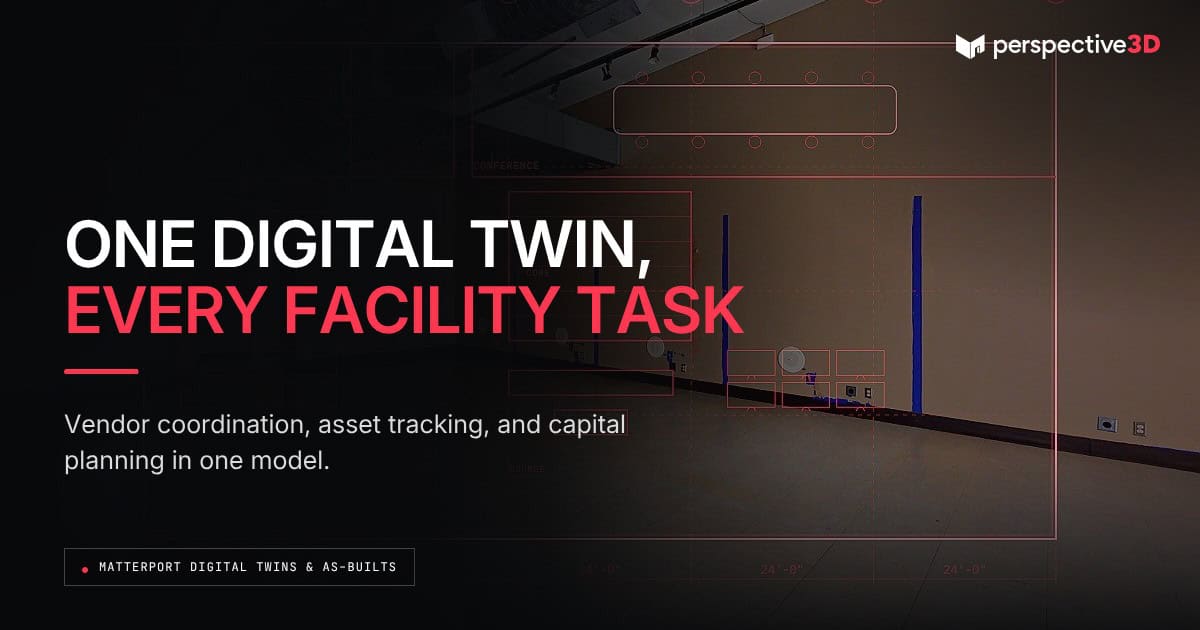
Matterport Digital Twins for Facility Management: From Drawings to Daily Operations
A Matterport digital twin gives a facility team one accurate model of a building that supports vendor coordination, asset tracking, capital planning, and daily operations. Instead of separate drawings, spreadsheets, and site visits for each task, the team works from...
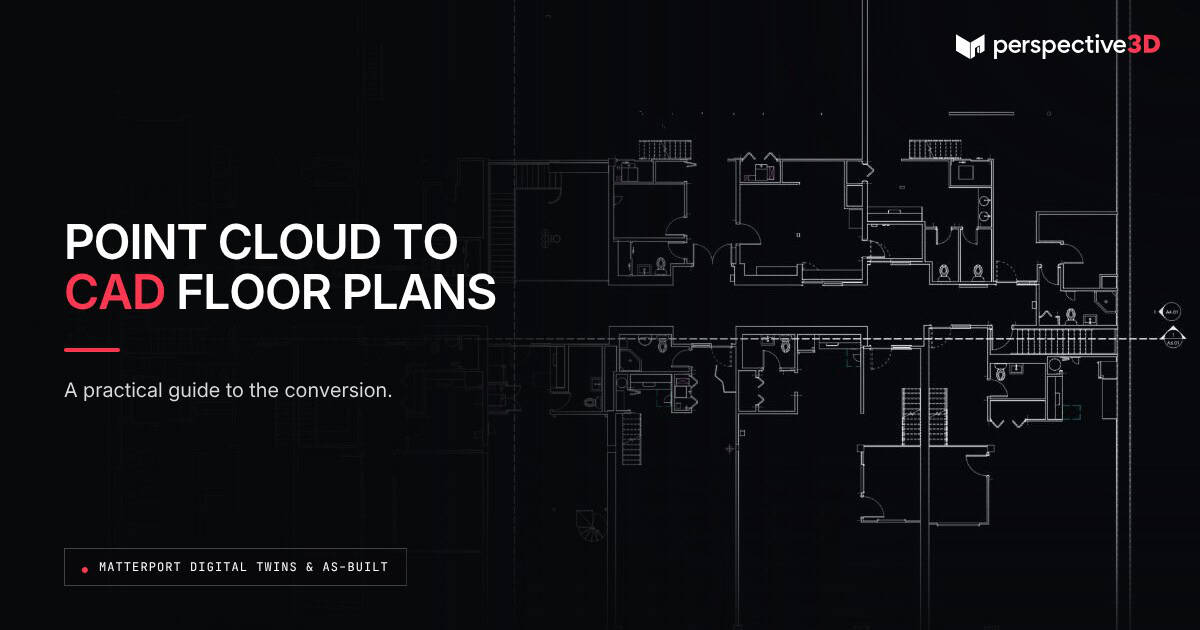
Turning Matterport Point Cloud Data into 2D Floor Plans and CAD: A Plain-English Guide
Converting a Matterport point cloud to CAD floor plans is a defined extraction and drafting process — not an automatic export. The point cloud gives a drafter accurate measurements to work from; turning that into a usable drawing still takes manual review and...
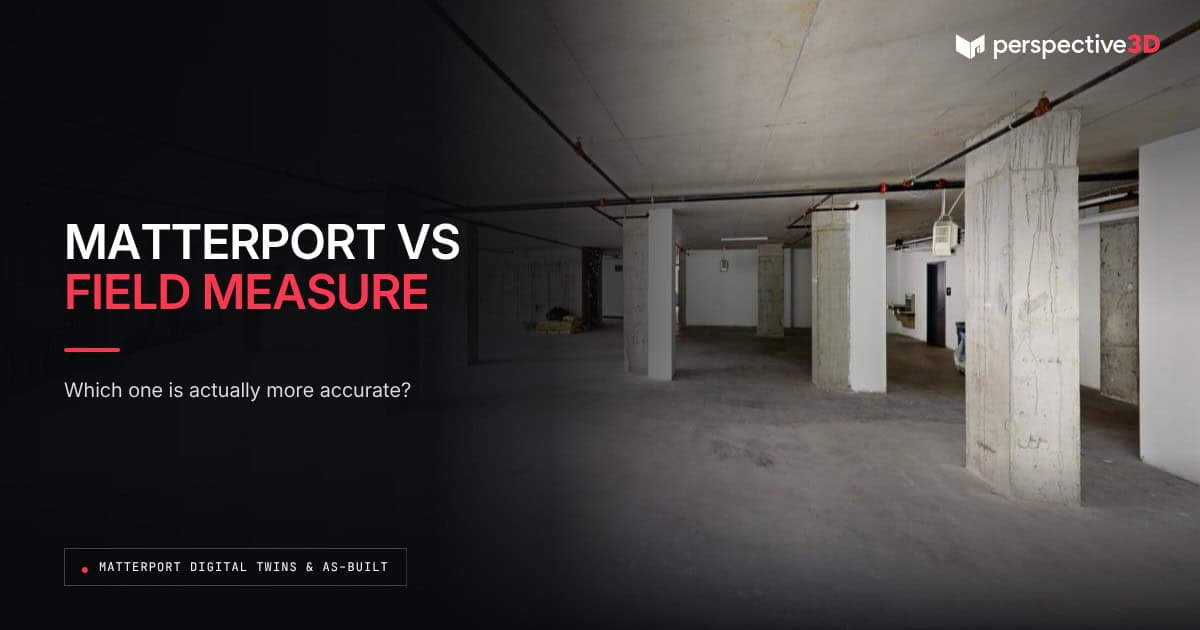
Matterport vs. Traditional Field Measure: A Side-by-Side for As-Built Accuracy
Matterport vs field measure is a real decision for as-built documentation: both produce dimensional data, but they differ in speed, completeness, and what happens if a measurement is questioned later. A scan captures the entire space at once and keeps the raw data on...

What ADA Compliance Documentation Actually Requires — and How We Support It
ADA compliance documentation requires accurate measurements of accessible routes, clearances, and fixture heights — not just a general description of a space. ADA compliance documentation matterport scans give facility teams and compliance reviewers those measurements...
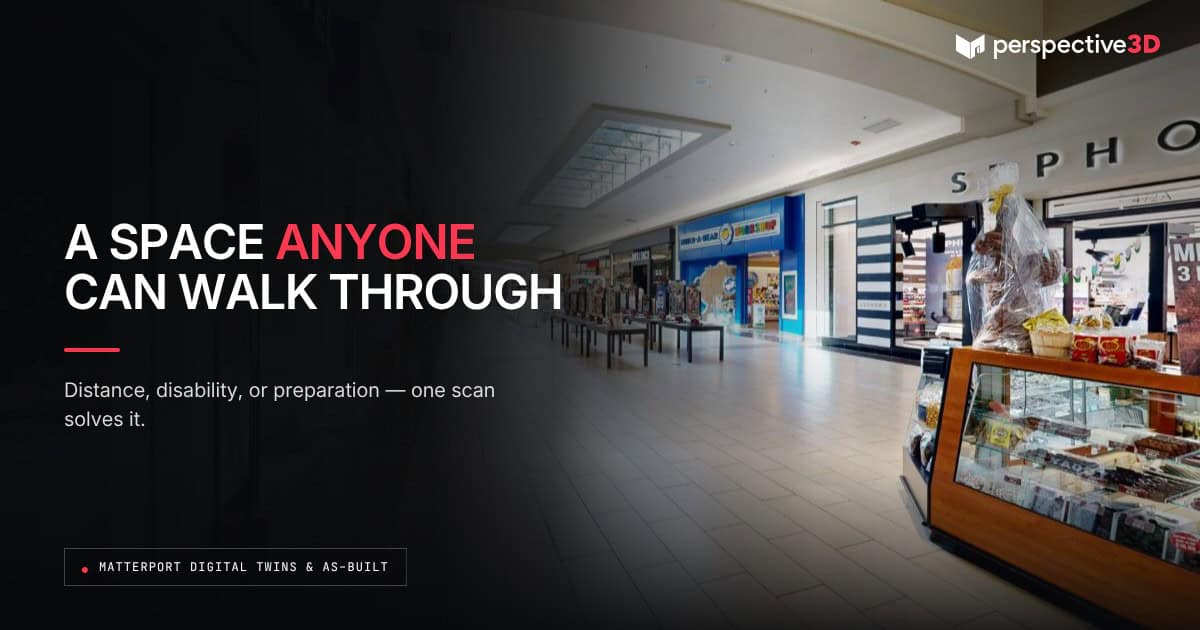
How a 3D Scan Makes a Physical Space Available to Everyone
A 3D scan gives people who can't physically visit a building a way to see it, move through it, and understand it anyway. That's the direct answer behind 3D scan accessibility ADA compliance work: one Matterport visit produces a digital twin that stands in for the trip...